
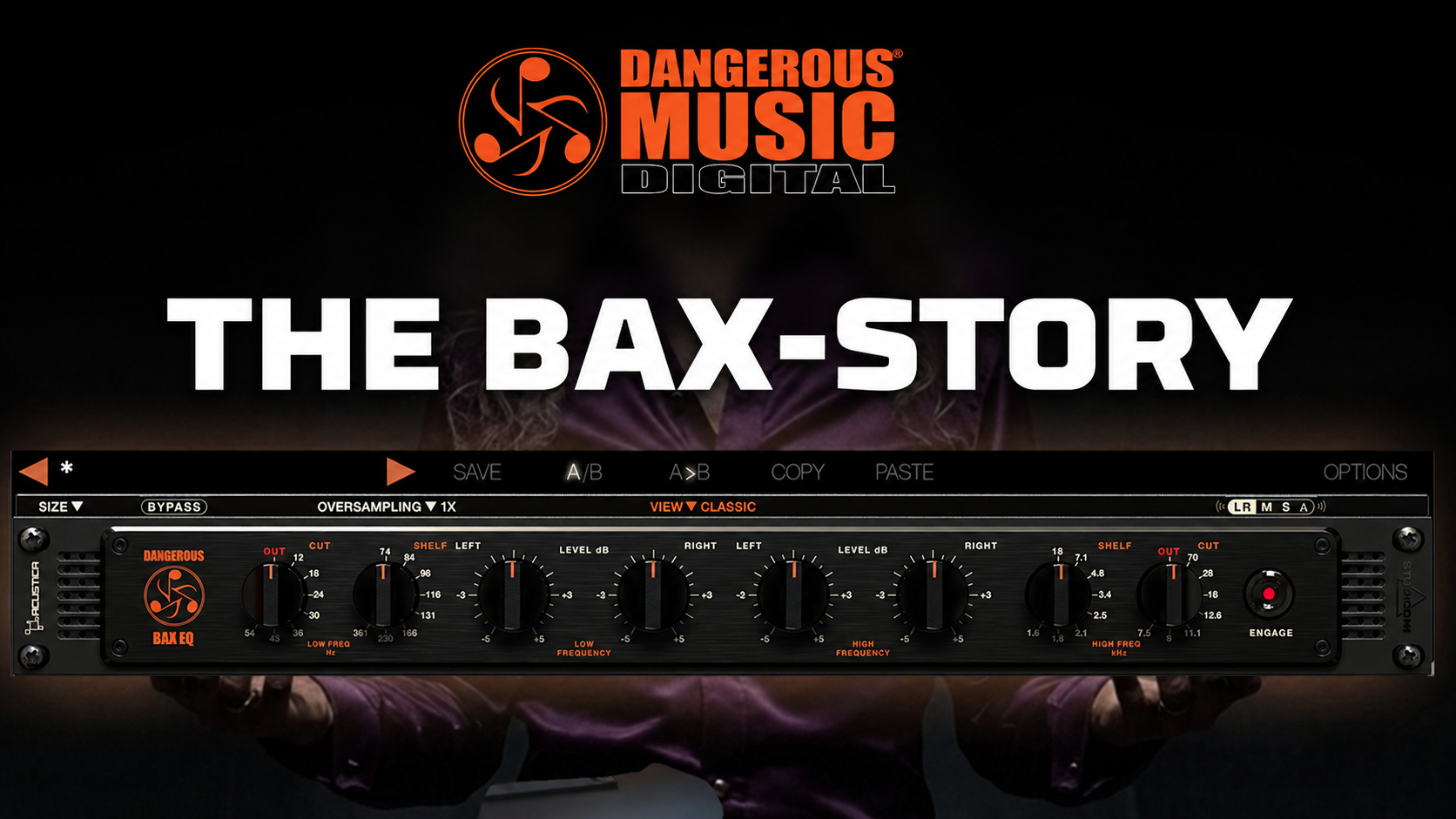
Dangerous Music released its first BAX EQ plugin in 2013. It gave engineers and producers a way to bring the broad, musical curves of the hardware into the DAW, and it remained available for more than a decade.
Over those years, plugin technology and capture methods moved forward. We also learned more about what we wanted from a digital version of BAX. By the time we began discussing a new release, a simple update no longer felt like the most useful path. We saw an opportunity to start again and get much closer to the character of the analog hardware.
This is the BAX-story.
Starting with a production BAX EQ
The process began with a BAX EQ pulled at random from the production line. Chris Muth, the mastering engineer who designed the original BAX circuitry, listened to it and checked it on an Audio Precision analyzer to confirm that it was performing correctly.
That unit became the first hardware reference for the plugin team. The goal was to capture the response of a real production unit while keeping the people who knew the original design closely involved in every stage of evaluation.
Listening separately, then comparing notes
Chris and marek evaluated each revision independently. They wrote down what they heard before discussing it with each other, which helped keep one person's reaction from shaping the other's.
Afterward, they compared their listening notes and looked at the measurements. Descriptions such as more forward, less open, or missing gravitas could then be connected to differences in the frequency response and filter behavior. That combination of ears and data gave the development team specific direction for the next round.
Version one: a starting point
The first version arrived with a polished interface, but the sound was still at an early stage. The core direction was visible, and there was plenty left to refine.
Version two: familiar, with differences
The second version was where the process became more revealing. The boosts and cuts felt familiar, although the slopes behaved differently from the hardware. Chris and marek also heard a more exaggerated, forward midrange and less of the sweetness, depth, gravitas, and open air they associated with BAX.
Audio Precision plots helped show where some of those differences were coming from. The team was able to give the developers more precise feedback, including changes around the anti-aliasing filter and the ripple visible in the response.
Version three: the sound opened up
Version three was a major step forward. The sound had more room to breathe, and listening felt easier and more natural. The overall character was moving into the right place.
The curves were still slightly different from the hardware, so Dangerous Music pulled a second BAX EQ from production, tested it, and sent it over as another reference. When the original hardware unit returned, it measured correctly again. The reference boxes were doing exactly what they were supposed to do.
The converter connection
At that point, the team took a closer look at the capture chain. Dangerous Music uses its own CONVERT-AD+ and CONVERT-2 mastering-grade converters for critical work every day. They are part of the listening path Chris and marek know, and they shape how the team hears and evaluates audio.
The converters were shipped to the plugin developers and used to shoot the impulse responses. That change brought the capture process into the same conversion environment the Dangerous Music team trusted when listening to the hardware.
The algorithms opened up. The response had the space, weight, and musical ease the team had been working toward.
Version four: ready
When the fourth revision arrived, marek heard the result before receiving Chris's notes or the latest measurement printouts. The response felt right. Chris's evaluation and the measurements confirmed the same direction.
After four major revisions, two hardware references, months of listening, and repeated comparisons against the original circuit, the new BAX EQ Plugin was approved.
What Certified by Dangerous Music means
Certification reflects the direct involvement of the original hardware team. Chris Muth and marek listened throughout development. Dangerous Music supplied and rechecked the hardware references, reviewed the measurements, contributed its own converters to the capture process, and retained final approval of the product.
The finished plugin was developed together with Dangerous Music Digital and Acustica Audio, in collaboration with Luca Pretolesi of Studio DMI. It combines Acustica's development platform, Luca's practical experience with BAX in high-level mixing work, and the knowledge of the people who designed and built the hardware.
A new chapter for the BAX family
The plugin carries the broad shelves and phase-coherent cut filters that made the BAX EQ a studio fixture, then adds Classic, Expanded, and Dual Mono views, Mid-Side processing, independent left and right operation, and final output control.
It also opens the BAX sound to people who may be meeting it for the first time. Some will use it entirely inside the DAW. Others may eventually bring the BAX500 or BAX EQ 19-inch hardware into their analog chain. All three formats share the same musical idea: shape the whole picture quickly, clearly, and with pleasure.
The development process took longer than a simple update would have. It also gave us the BAX EQ Plugin we wanted to release in 2026.
The next part of the story belongs to the people who put it on their own music.