
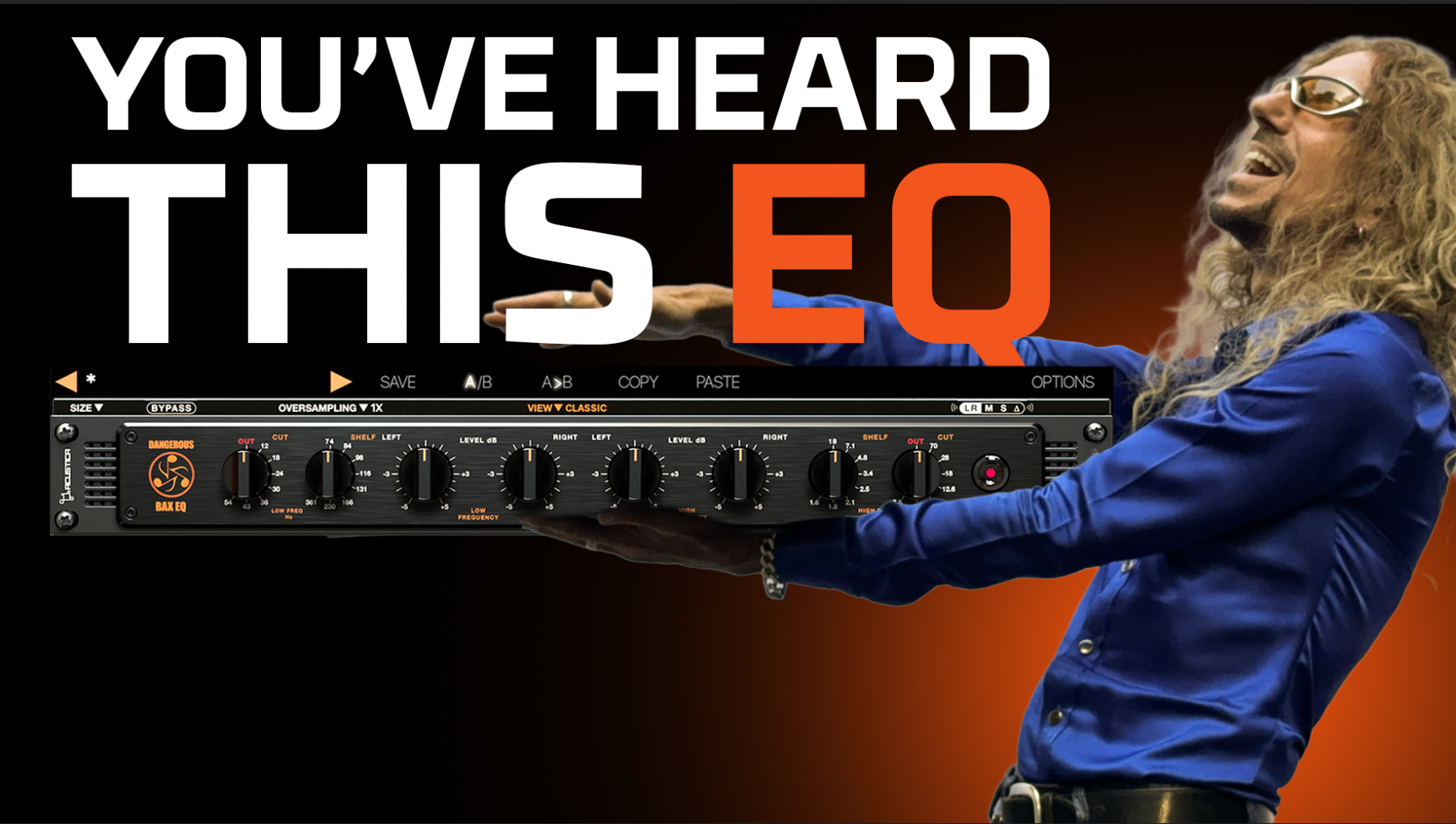
You already know the sound of the BAX EQ. It’s lived on countless mixes and masters, adding the kind of weight, air, and dimensionality that helps music feel finished without making it feel overworked.
The new BAX EQ Plugin brings that familiar Dangerous Music character into the DAW. It’s a total ground-up redesign created by the same brains and ears behind the original hardware, developed together with Dangerous Music Digital and Acustica Audio, in collaboration with Luca Pretolesi of Studio DMI.
The BAX approach
BAX is designed for broad, musical decisions. Its shelves invite you to reach for the controls, make a move, and listen to the whole picture improve. A little low-frequency lift can give a kick or bass more gravitas and warmth. A high shelf can open pads, strings, vocals, or an entire mix with a smooth sense of air.
The controls feel immediate because the original BAX circuitry was designed by mastering engineer Chris Muth with the ease and pleasure of classic tone controls in mind. You can lift, tamp, and shape the energy of a track without turning every adjustment into a technical exercise.
Clear space with phase-coherent cut filters
The high- and low-cut filters are an equally important part of the BAX sound. They remove frequencies that compete for headroom and attention while keeping the result musical.
The low cut can clear infrasonic rumble from HVAC systems, traffic, handling noise, and everything else a microphone or recording chain may capture below the useful range of the music. That recovered headroom can translate into more punch, clarity, and dynamic range.
The high cut helps control ultrasonic energy that can contribute to brittle or strained sound farther down the signal chain. Used gently, it can leave the audible top end feeling bright and open while reducing the out-of-band information you do not need.
Across a full session, these filters can make balancing easier. Guitars, synths, vocals, drums, and effects each get a clearer place to live, and the mix begins to fall together more naturally.
Three views for different ways of working
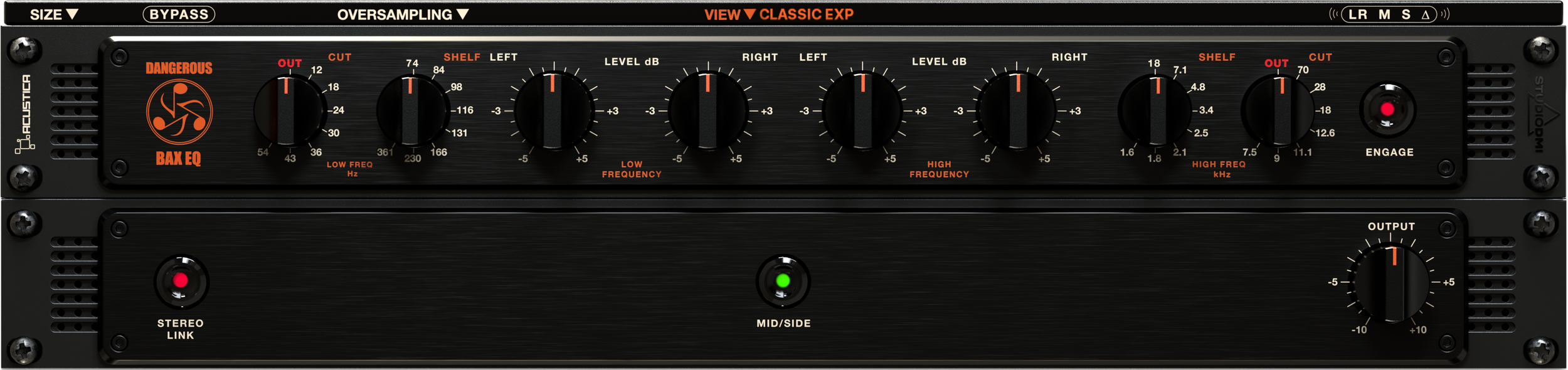
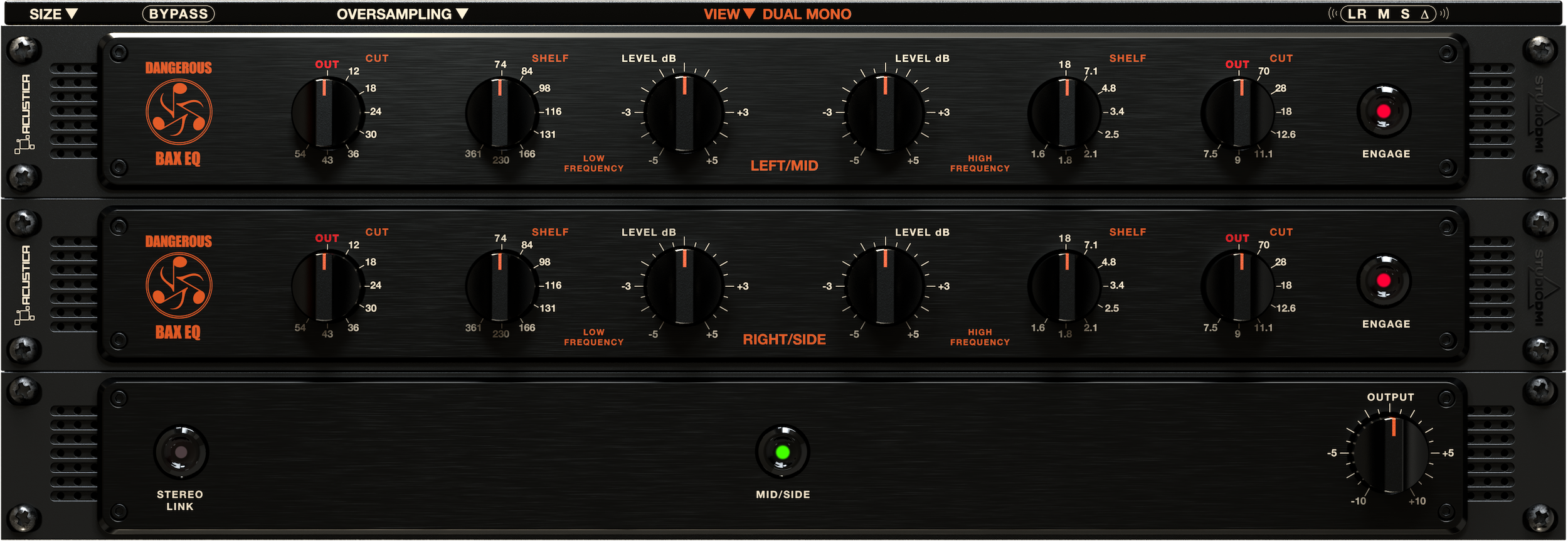
The plugin includes Classic, Expanded, and Dual Mono views, so you can choose the level of control that fits the session.
Classic keeps the experience familiar and fast, with the core BAX controls presented in a straightforward layout

Expanded adds deeper access to the plugin's processing and makes the additional software features easy to reach
Dual Mono provides independent left and right control for correcting imbalances or shaping each side of a stereo source on its own terms
Mid-Side processing lets you work on the center and sides independently. You can anchor the low end in the middle, open the edges of a mix, or adjust width and dimensionality with the same musical curves. A final output control makes level matching and gain staging simple.
Where to use it
BAX can be as focused or as broad as the job requires. Place it on kick or bass for resonance and weight. Use it on vocals for presence, air, and a more three-dimensional sense of space. Let strings and pads shimmer. Clean up stems before they reach the mix buss. Use it across the mix, or bring it into a mastering chain for final tonal shaping.
The broad curves make it especially useful when you know how you want the music to feel, even when you do not want to spend time hunting for a narrow frequency.
Certified by Dangerous Music
The BAX EQ Plugin was captured using Dangerous Music's own CONVERT-AD+ and CONVERT-2 mastering-grade converters, supported by precision Audio Precision measurements and repeated critical listening. The original hardware team evaluated multiple revisions before approving the finished product.
That process is what stands behind the phrase Certified by Dangerous Music. The plugin carries the sound, design thinking, and approval of the people who created the BAX hardware.
Try it on your own music
The BAX EQ Plugin is available in VST3, AU, and AAX formats for major DAWs on macOS and Windows. It launches at $179, with a free 30-day trial so you can hear what it does on your own tracks, mixes, and masters.
Put it on something that needs more weight, space, or polish. Turn a few knobs. The BAX approach usually makes sense very quickly.